
Google is no longer the finish line. It’s a data source for something else.
Right now, when someone asks ChatGPT, Perplexity, or Google’s AI Overviews a question, that AI doesn’t scan a list of blue links. It breaks the question into smaller sub-questions, pulls content from multiple sources in parallel, and synthesizes an answer — often citing 3-5 sources along the way.
Whether your brand is one of those sources isn’t decided by SEO rules anymore.
That’s the shift most marketers are still sleeping on. I’m not.
Here’s what’s actually happening
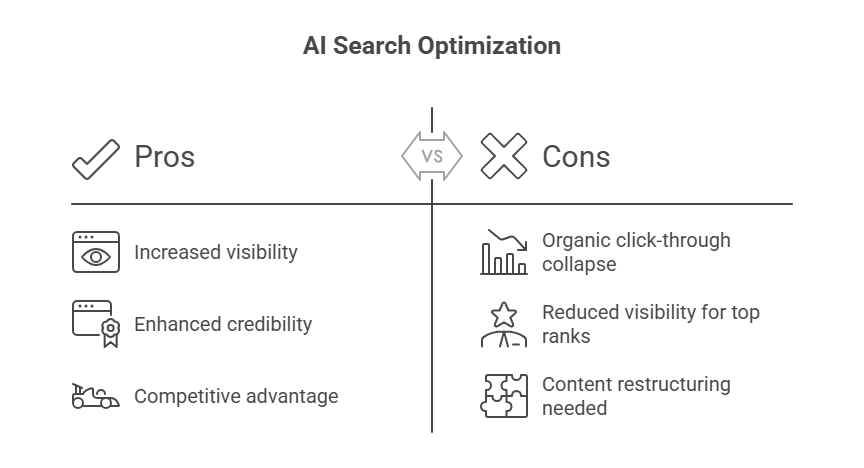
AI Overviews already appear in roughly a quarter of all Google searches. Industry research (Seer Interactive, 2025) has found organic click-through rates collapsing by over 60% on queries where an AI Overview shows up. Meanwhile, the overlap between a page ranking #1-10 on Google and that same page getting cited inside an AI answer has dropped from around 70-75% a year ago to well under 40% today.
Translation: ranking #1 on Google used to guarantee visibility. Now it barely guarantees a mention.
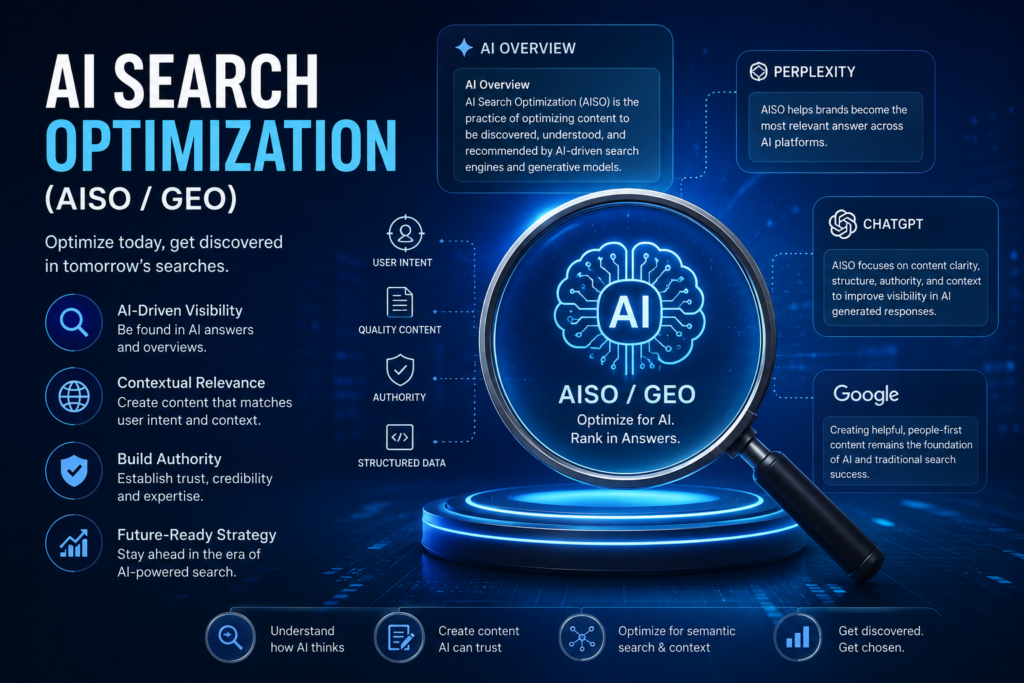
This new game has a name — AI Search Optimization (AISO), also called Generative Engine Optimization (GEO). It’s the discipline of structuring content and brand presence so AI engines choose to cite you when they answer a question.
Why marketers should care right now
Three numbers changed my thinking on this:
→ Traffic from AI platforms converts dramatically higher than traditional organic search — some studies put ChatGPT and Claude referral conversion rates in the 14-17% range, versus under 2% for typical Google organic traffic.
→ A Princeton-led study (the paper that coined the term GEO) found that adding verifiable statistics, citing sources, and structuring content clearly can lift a page’s visibility inside AI answers by up to 40%.
→ And the tactic that used to win at SEO — keyword stuffing — actually performs worse than doing nothing in generative engines. AI models reward natural language, depth, and clear entities. Not repetition.
This isn’t SEO with a new coat of paint. It’s a different scoring system.
What actually moves the needle (the practical part)
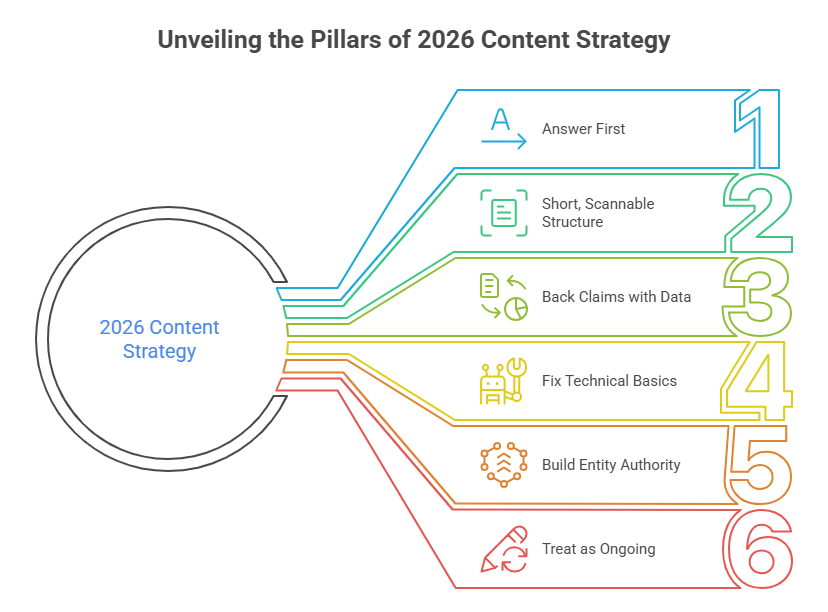
If you’re building content strategy in 2026, here’s where I’d start:
- Answer first, explain second. AI systems evaluate the opening of your content most heavily. Put the direct answer to the core question in the first 60-100 words — don’t build up to it.
- Short, scannable structure. Two-to-three sentence paragraphs, bullet points, and clear subheadings. Long unbroken blocks of text are harder for AI to extract and cite.
- Back claims with real numbers and real sources. “AI traffic is growing fast” gets ignored. “AI referral traffic grew significantly year-over-year” with a named source and a linked study gets cited. Specificity is the currency now.
- Fix the technical basics. Submit your sitemap to Bing Webmaster Tools (ChatGPT Search pulls from Bing’s index), and add proper Article, FAQ, and Author schema markup.
- Build entity authority, not just backlinks. AI systems increasingly evaluate who you are across the web — consistent expertise signals, author bios, third-party mentions — over pure link volume.
- Treat it as ongoing, not one-and-done. AI engines weight recency heavily. A refreshed 2026 article will consistently outrank a stale 2024 one that never got updated, even on the same topic.
The opportunity, if you’re early
Most brands — and most marketers — haven’t touched this yet. The GEO market is projected to grow from under a billion dollars in 2024 to several billion within a few years, and by most projections, half of all search behavior will be generative by 2028.
Citation authority is going to compound the same way domain authority did for the last decade of SEO. The people building it now — testing structure, tracking citation frequency, learning what actually gets an AI to reference them — are the ones AI systems will default to citing in 2027 and beyond.
I’m one of them. Figuring this out in public, one experiment at a time.
If you’re a marketer, founder, or content creator wondering whether this actually matters for your business — it does, and probably sooner than you think. Happy to compare notes if you’re exploring this too.
#AISO #GEO #GenerativeEngineOptimization #DigitalMarketing #AISearch #MarketingStrategy